Why you should eat raw food

Linet Wambui.POSTER-01

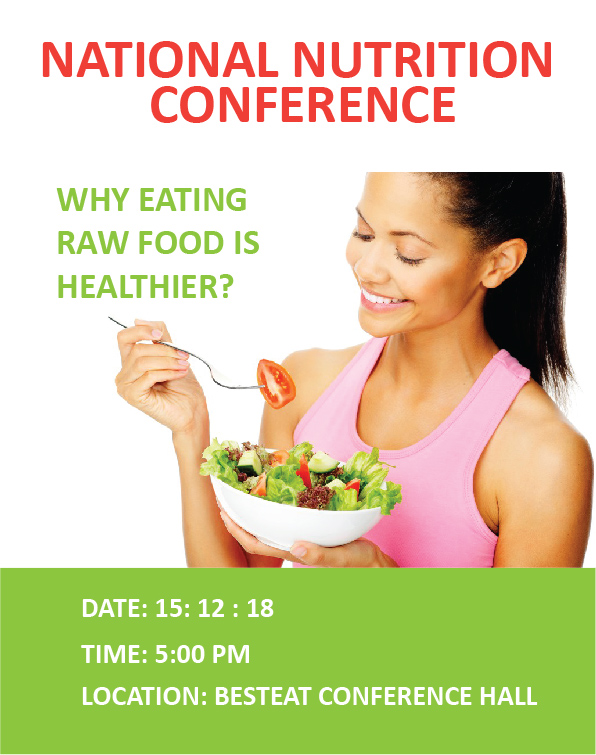
What is a raw-food diet? Raw foods are foods that have not been cooked or processed. There are varying levels of raw-food diets, all of them involve eating mostly unheated, uncooked and unprocessed foods. A raw-food diet is made up of at least 70% raw foods. The diet often includes fermented foods, sprouted grains, nuts and seeds, in addition to raw fruits and vegetables.

Here are some reasons why most dieters prefer raw food to cooked food. Cooking foods deactivates the enzymes found in them. However, there is no evidence that food enzymes contribute to better health, some nutrients, and particularly water-soluble vitamins, are lost during the cooking process. Raw fruits and vegetables may contain more nutrients like vitamin C and B vitamins, cooked foods are easier to chew and digest than raw foods. Proper digestion is necessary to absorb a food’s nutrients.

Many people also choose to go on a raw food diet to flush out toxins and avoid potential carcinogens. By consuming raw food, you may reduce your risk of heart disease, obesity, and diabetes. Doctors recommend a raw food diet if you can but for safety concerns, it is best to avoid doing so.

There are certain health benefits to eating raw foods. These are:

  • Helps detoxify the body.
  • Can aid weight loss.
  • May improve digestion.
  • May reduce the risk of heart disease, obesity, and diabetes.
  • May help reduce your risk of cancer.
  • Can provide relief from constipation.
  • May improve liver function.
  • May increase your energy levels.

In as much as eating raw foods is healthy, there are certain disadvantages associated with it. A practical example would be those who eat raw fish as it contains dangerous bacteria and microorganisms that are only eliminated by cooking. Eating a completely raw diet that includes fish and meat comes with a risk of developing a food-borne illness.

From the list above, there are numerous benefits to having a raw diet plan and you should take it up.
Balanced diets


Linet Wambui

https://www.surveymonkey.com/r/N22LV2G

Whenever you visit the doctor one of the questions asked will be about eating a balanced diet. We don’t pay much attention to all the advice the doctor gives about our health associated to the food we eat. Today I’ll talk about benefits of having a balanced diet.
There are seven main classes of nutrients that the body needs. These are carbohydrates, proteins, fats, vitamins, minerals, fibre and water. It is important that everyone consumes these seven nutrients on a daily basis to help them build their bodies and maintain their health. Deficiencies, excesses and imbalances in diet can produce negative impacts on health, which may lead to diseases.

The nutrients are divided into two categories the macronutrients and micronutrients. The macro require to be taken in fairly large proportions and they include the carbohydrates, proteins, fibre water and fats while the micro need not to. They include vitamins and minerals. We’ll talk about the macro nutrients in a person’s body.

Carbohydrates are essential as they are energy giving foods thus providing the body enough energy for it’s normal metabolism to take effect. Sources of carbs include wheat, potatoes of all kinds, maize, rice, cassava and bananas.

Proteins are needed in our diets for growth and to improve immune functions as they help in building of enzymes that are in the body. The main sources of proteins are meats, chicken, eggs, breastmilk, beans, ground nuts, lentils, fish, cheese and milk.

The saying goes that water is life and this is no less true as people can live without solid food for a few weeks, but we cannot live without water for more than a few days. An adult needs about 2–3 litres of water. Benefits of water include enabling the body make cells and fluids such as tears, digestive juices, urine and breastmilk and sweat, above all most body processes take place in water.

Fibres are foods that are not digested when ingested in a person’s body. Fibre helps in the digestion process and more so in the egestion(removal of toxic wastes from the body like faeces) thus preventing constipation. Examples of fibre include whole grain cereals.

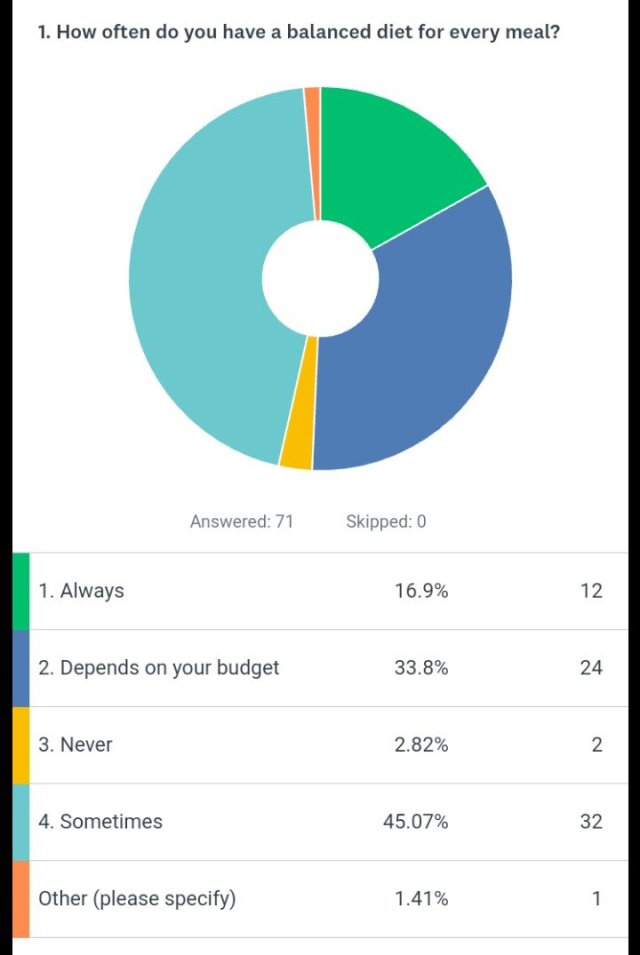
From the above, we find that it is very essential that a person takes a balanced diet in each meal in order to maintain a healthy lifestyle.

Ndengu samosas

Linet Wambui

INGREDIENTS
2 1/2 cups all purpose flour
1/2 cup of water
1 cup of warm milk
2 cups of boiled lentils (ndengu)
1 litre of cooking oil
2 medium onions chopped (preferably white)
Salt to taste
Deep frying pan & Skimmer (metal preferably)
Paper napkins
Sufuria or cooking pot and also a pan

PROCEDURE
STAGE 1

  • In a large mixing bowl, put the flour and salt together and make a well at the centre then add the water and a little oil at the centre and mix till all the water is absorbed and the surface of the bowl is dry and the dough doesn’t stick.
  • Work the dough for about 3 minutes or till it has a smooth surface when you form a ball. It should at this stage be smooth and a little firm when you poke your finger in it. Cover the dough with a wet kitchen towel or plastic wrap and make sure no part of the dough is exposed to air.
  • Leave to rest for at least 30 min at room temperature. This is to allow the gluten to rest, failure to which the dough will be elastic and cant be rolled. The longer the better

STAGE 2 (FILLING)

  • Now lets make the samosa filling. Put your chopped onions in a sufuria together with a little oil. Cook until slightly golden brown.
  • Put in the boiled lentils and mix it until the onions are evenly distributed all through. At this time you need to move fast because the lentils are dry and will suck in all the oil in the sururia and if you dont you risk burning the filling. No one wants to eat burnt anything.
  • Now sprinkle in all your spices including salt and mix continously. You must NOT dump all the spices at one area…this will clump up and someone will chew it and it wont be pretty. So sprinkle and stir continously. After about twenty seconds take it off the heat.
  • I know that the spices are not cooked but dont worry because when we deep fry they will cook with the dough.

STAGE 3

  • Take the dough which by now is ready to work with. Separate the dough in small balls.
  • Put the flat pan on the fire and let it be hot.
  • Roll the ball to round shape till its thin but take care it doesn’t tear. Dust the surface with flour as you roll the dough to avoid it from sticking on the surface.
  • Cook the rolled up dough on the preheated pan for a few seconds on each sides til it gets firm but not fully cooked. Set aside.
  • Repeat this process till all the dough is done.
  • Neatly arrange the prepared wraps and cut into two awaiting preparation into samosa.
  • Spoon a generous 1-2 tablespoons filling in the center of a half-circle; lightly moisten the dough edges with water or flour paste, using your finger. Fold the end over the filling to form a triangle, and then continue to fold up the strip in triangles, like you would a flag. Continue with remaining dough. Set samosas on tray.
  • Place your frying pan with the oil on the fire and until till hot.However, let it not be too hot because the pastry will burn and the spices will not cook, let the oil be hot enough ie when you drop a small piece of pastry it goes to the bottom and then to the surface while producing bubbles. Deep fry your samosas until golden brown. Remove from the oil and allow to cool and drain off any excess oil over a paper towel.
  • You can enjoy them with a cup of tea or any another beverage of your choice. I like them warm and with a little kachumbari.


Fear Causing Your Eating Problems.

Linet Wambui

HOST: Hello, my name is Linet Wambui and I will be discussing about eating and emotions. I am joined by one of the best nutritionists who has been dealing with patients suffering from eating disorders and today she will take us through some of the challenges they have in relation to emotions. Welcome Doctor

DR. KAREN: hi, my name is Karen and today I’ll be discussing about eating habits in relation to emotions; in this case fear. Normally as people go through their day to day activities, there are those who have different eating disorders which include Anorexia Nervosa, Bulimia, binge and many more. For us to understand these problems under the topic emotions, we’re going to go through how to conquer fear so we can be able to cope with the different disorders that people face.
The first thing you are supposed to do if you have any eating disorders as I said before in order to cope with these fears we are supposed to do some activities and for me as a nutritionist what I tell my patients are some few steps on how to conquer your fears
First, write down your fears, try analyse yourself sit down and think about what you fear most that triggers your eating disorders and see how you can solve them step by step.
Next as I had said you are supposed to analyse, know that it is you trust yourself these are things from your mind and you’re trying to look out for yourself, therefore don’t doubt what you’ve written down. The third; listen to your thoughts. Don’t ever doubt your intuition, think twice but don’t overthink as much follow what you had written and take your time. Lastly, just address the fear if you’re indeed worried that it will become true and most of the people I’ve talk to this has always worked for them so you are supposed to be relaxed and don’t worry as it happens a lot and everything will be okay.

HOST: Thank you for that wonderful discussion and I’m sure I will host you again next time to continue tackling this topic on emotional eating.

DR. KAREN: Thank you too

HOST: You’re welcome.

Proper lunch


Linet Wambui

This slideshow requires JavaScript.

Even for those who love being in the kitchen, sometimes it can be exhausting and we all experience those lazy days that we feel that the kitchen is not where we want to spend our time, or we may be in a hurry to make an easy meal for the day. Today I would like to guide you through an easy recipe to have a healthy lunch and at an affordable budget.

Matoke and Sukuma wiki

What You Need/ Ingredients

6 large potatoes
5 unripe bananas/ matoke
4 tomatoes (2 for each meal)
2 large onions (1 for each meal)
1 dhania(coriander)
Cooking oil
Salt
1 large bunch Sukuma wiki (cut into thin shreds)
Garlic(optional)

Method to cook the matoke

  • Peel the matoke and potatoes then chop them into your preferred sizes and rinse them thoroughly
  • Chop the onions, tomatoes and dhania separately… preparing all the ingredients before you start cooking makes it a fast procedure to cook.
  • Heat some cooking oil in a pan/sufuria and the put the onions and garlic until they are brown enough
  • Add the tomatoes and a pinch of salt then let the tomatoes mash into a paste
  • Add the matoke into the paste and add a cupful of water. Leave the food cook for about 10 minutes and then put in the potatoes and add another cupful of water and 1tsp of salt and let it cook for 20 minutes
  • Put in the dhania once the food is ready to season it

Method for Sukuma wiki

  • Cook the onion with a little oil in a suitable pot until it turns translucent then add the Sukuma and tomatoes and stir. Do not allow them to brown
  • Cook while covered for about 5 minutes before stirring again until the Sukuma wiki is cooked and bright green in colour
  • Add two pinches of salt
  • Serve hot with the matoke.